Arizona has a reputation for heat, but the state covers a huge range of elevations. Flagstaff, Prescott, Payson and the White Mountains see hard freezes every winter, and even the low desert around Phoenix, Tucson and Yuma gets the occasional night when temperatures sit below freezing for several hours. The problem in the desert is that homes are not built with freezing in mind. Water lines run along exterior walls, backflow preventers sit fully exposed in the yard, and pool equipment has no shelter at all. A single cold night can split a pipe that has never had a problem before.
Why Freezing Pipes Burst
Water expands as it turns to ice. When ice forms inside a pipe, it pushes the remaining water toward a closed faucet or valve, and pressure builds between the ice blockage and that closed end. That pressure, not the ice itself, is what splits copper, cracks PVC fittings and blows apart brass valve bodies. The break often stays sealed while the line is frozen, which is why many homeowners only discover the damage the next morning when the sun thaws the pipe and water starts spraying.
In Arizona, the most vulnerable spots tend to be above ground. Copper and PVC exposed to open air lose heat quickly, especially on clear desert nights when temperatures drop fast after sunset. Wind across an open yard makes it worse.
The Parts of an Arizona Home Most at Risk
Before a freeze warning, walk the outside of your house and look for these common trouble spots:
- Backflow preventers on irrigation and fire lines. These brass assemblies sit above ground and are expensive to replace when the body cracks.
- Hose bibs on exterior walls, particularly older non-frost-free models.
- Pool and spa equipment, including pumps, filters and the PVC plumbing between them.
- Exposed irrigation risers and drip manifolds in landscaping.
- Evaporative cooler supply lines running up the outside wall to the roof.
- Water heaters and pipes in unheated garages, especially in higher-elevation homes.
- Main supply lines where they rise out of the ground near the meter or pressure regulator.
Simple Steps That Prevent Damage
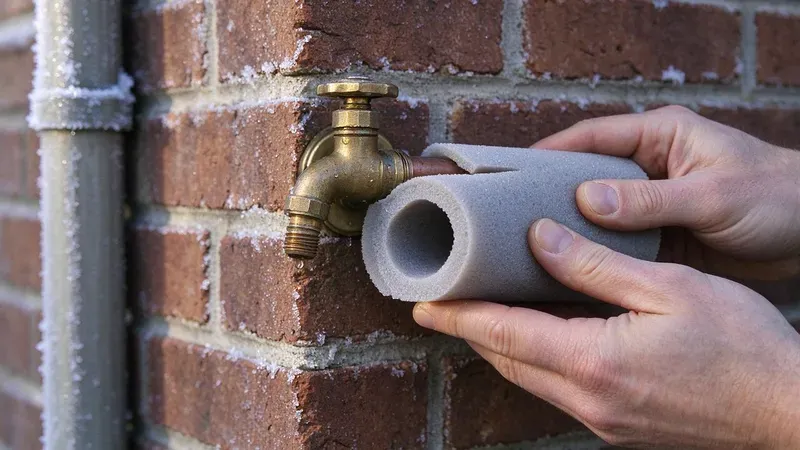
Most freeze protection costs very little. Insulate exposed pipes with foam pipe sleeves from any hardware store, and tape the seams so cold air cannot slip in. Fit hose bibs with insulated foam covers after disconnecting the hose, since a connected hose traps water in the faucet. For backflow preventers, use an insulated pouch or wrap the assembly in towels and cover it with a bucket or a purpose-made insulated bag. Some homeowners add a low-wattage heat tape rated for outdoor plumbing, which is a good investment in the high country.
For pool equipment, most modern pool controllers have a freeze protection mode that runs the pump when temperatures approach freezing. Moving water is far less likely to freeze, so confirm that setting is on before winter. Drip a faucet on an exterior wall overnight during a hard freeze, which relieves pressure in the line and keeps water moving. Open cabinet doors under sinks on outside walls so warm room air reaches the pipes.
Homes in Flagstaff and other mountain towns need more permanent measures. Frost-free sillcocks, insulated crawlspaces, heat tape on vulnerable runs and a reliable thermostat setting when you travel all matter. If you leave a cabin or second home empty for the winter, shutting off the main and draining the lines is the safest approach.
If a Pipe Freezes
If you open a faucet and get only a trickle during a cold morning, a pipe may be frozen. Leave the faucet open, then warm the suspected section gently with a hair dryer or space heater kept a safe distance away. Never use an open flame or torch. Know where your main shutoff is before you start, because a split pipe will begin leaking as soon as it thaws. Repairs for a split hose bib or a single section of pipe are usually modest, often in the $200 to $500 range, while a cracked backflow preventer can run $400 to $900 or more installed, depending on size.
When to Call a Professional
Call a licensed plumber if you find a split pipe, a cracked backflow body, water coming through a wall or ceiling, or a frozen line you cannot safely reach. CVR Plumbing handles freeze damage repairs, insulates vulnerable lines and installs frost-free hose bibs and protected backflow assemblies across Arizona. If a cold snap has left you with a leak or no water, reach us at (928) 470-9009 and we will help you get the water back on and the damage under control.
Need a licensed plumber in Arizona?
CVR Plumbing answers 24/7 and offers same-day service across Arizona.